
USFans Shipping: Choose a Service for the Parcel You Actually Have
Choosing USFans shipping starts with the contents and destination, not a route name someone recommends. Two services can only be compared meaningfully when they describe the same parcel and the conditions are clear. A low figure or a short time window may answer only part of the decision.
Begin by confirming which goods you intend to send and whether any product questions remain unresolved. Then compare the services offered for that destination and parcel. Keep the quote date beside each amount so an old tariff is not mistaken for today's choice.
On this page
Separate the two shipping questions
The published USFans purchase sequence distinguishes the movement of purchased goods to the warehouse from the later international parcel stage. If a seller has not sent the goods, selecting an international service is not the answer to that delay.
For a product-order question, use the order-status guide and ask about the particular item. For goods already being prepared for onward shipment, use the warehouse guide to check the contents before choosing the service.
This distinction also matters when a message says the seller is being urged to ship. Treat the message as information about that purchase stage, not proof that an international carrier has your parcel. Read the actual record before making a broader conclusion.
Establish eligibility before comparing price
Check that a candidate service applies to the destination and the actual contents. An item appearing in a product collection does not establish that every shipping option accepts it. A route recommended for ordinary clothing may not answer the question for a different type of goods.
Describe the contents accurately when checking restrictions. If a detail is unclear, ask through the relevant support channel before dispatch. Do not select an inaccurate category simply to make a service appear in a comparison.
The support guide helps formulate the question. You need an answer about the actual parcel, not a general assurance that people have shipped similar-looking products before.
Use packed measurements
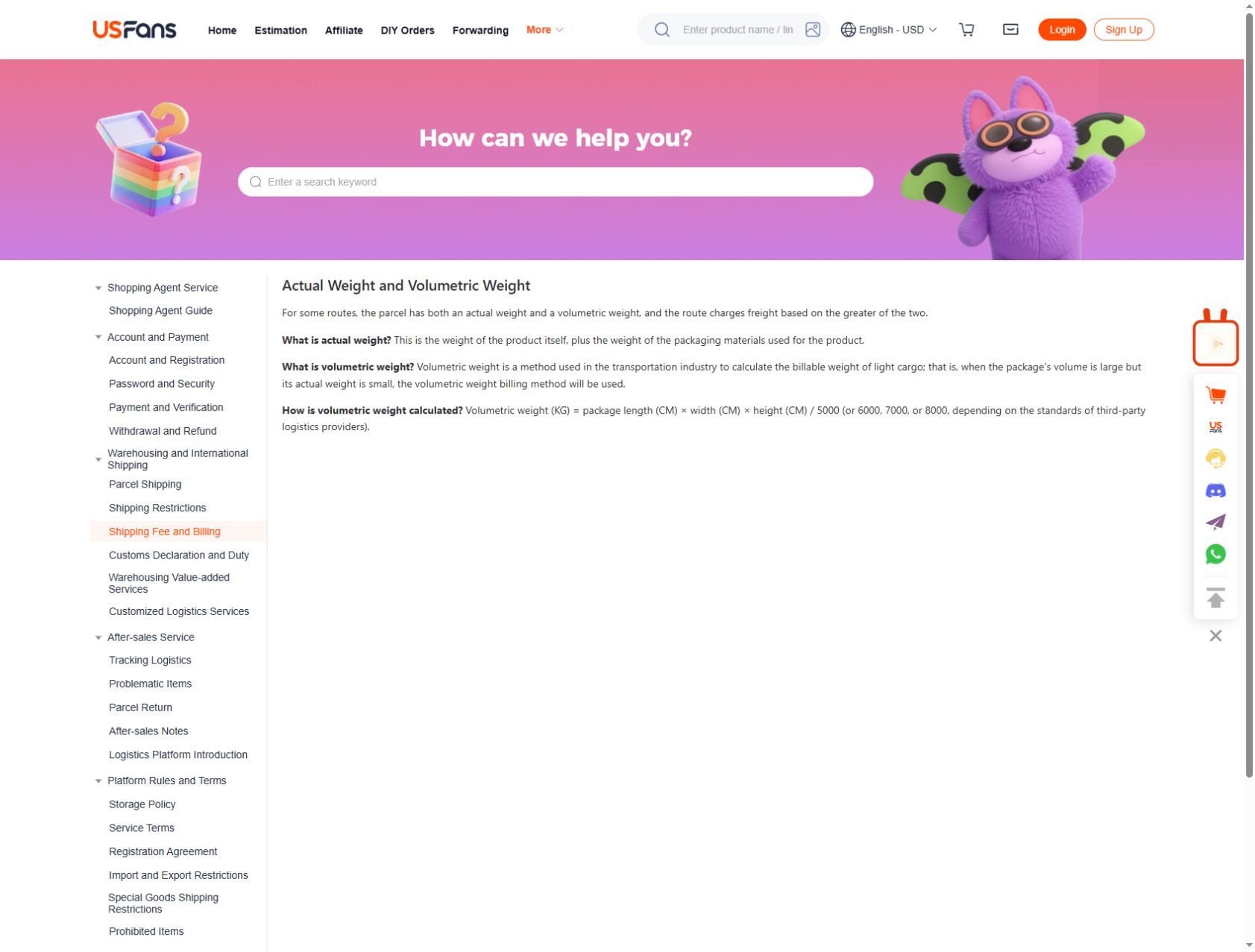
The USFans weight explanation checked on 30 September 2026 includes packaging in actual weight. Some routes charge on the larger of that weight and volumetric weight, with the divisor set by the logistics provider. Check those inputs for each service: the bare product weight can miss the space taken up by the finished box.
The shipping calculator guide walks through the arithmetic. If your inputs are tentative, treat the result as tentative too. Recheck after a meaningful change to packing, contents or destination rather than carrying the earlier amount forward unchanged.
Do not assume that a lower volume-weight figure automatically makes one service cheaper. The resulting cost depends on its own tariff and conditions, not just on one weight calculation.
Compare offers across the same questions
Keep a simple comparison for the services actually presented for your parcel. Avoid filling missing details with a guess to create an apparently complete table.
| Question | Why it matters |
|---|---|
| Is this service applicable to these contents and destination? | An inapplicable offer is not a usable bargain. |
| Which weight basis and measurements were used? | Different inputs can explain different amounts. |
| What does the quoted amount include? | Separate charges can change the overall comparison. |
| Which events define the time estimate? | Transport time and the whole purchase timeline are different. |
| What conditions apply to problems or inquiries? | A broad promise does not identify the action needed for your case. |
Keep the currency consistent. A displayed conversion should not be mistaken for a complete delivered total. Read the actual selected amount before authorising the shipping payment.
A packing decision can change the comparison
Suppose you want to send a sweater with a jacket. Combining them creates a different parcel from sending either alone. Compare the real available configurations instead of assuming that the second item adds no cost or that a split parcel must be more expensive.
Inspect the jacket candidate on OG
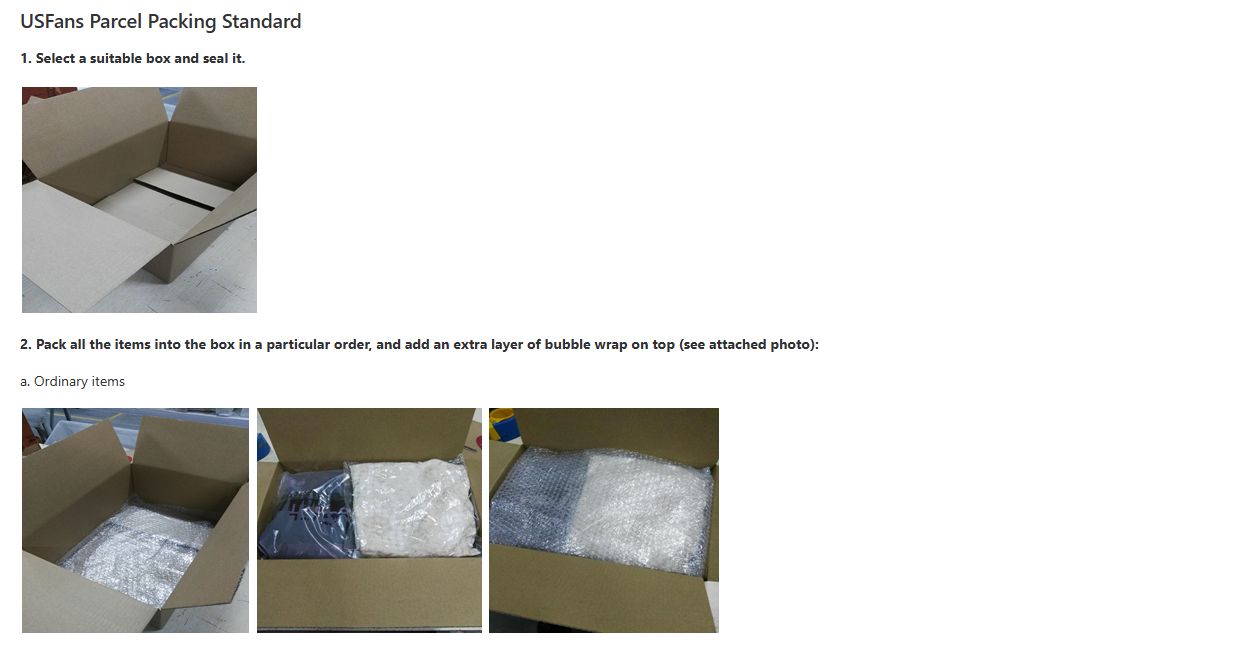
Inspect the jacket's option before adding it to the parcel plan. Its product photographs cannot supply packed dimensions or establish which route accepts the combined contents; obtain those details for the prepared shipment.
If a packaging change is proposed, understand what is being removed or altered and whether it meets your needs. A smaller figure is not the only consideration. The jacket guide addresses the product selection separately from parcel planning.
Interpret speed claims carefully
A service's estimate needs defined starting and ending events. Someone reporting a quick journey from carrier handover may be describing less time than your full wait from product payment. Do not use those figures interchangeably.
The delivery-time guide explains the clocks. If you need the goods by a fixed date, establish the actual commitment rather than treating a favourable anecdote as a promise.
Once the parcel moves, use its events in the tracking guide. A previous estimate cannot tell you where the shipment is now, and a quiet tracking period does not establish a particular cause without further information.
Country questions need a country-specific answer
For a shipment to Mexico or Argentina, enter that destination with the actual goods and compare the services returned for those inputs. Do this before relying on onward shipment in your purchase budget. Another country's price table cannot establish availability, price or clearance conditions for your address.
Use the destination and any required local details in the actual service inquiry. Clarify the relevant conditions before purchasing goods on the assumption that they can be forwarded. Do not infer tax or clearance treatment from a promotional route name.
For reading in other languages, use the Spanish shipping guide, Polish shipping guide or Latvian shipping guide. A language choice does not itself establish the parcel's destination or applicable terms.
Protection and delivery instructions deserve separate attention
If considering protection, check the terms for the chosen service. What event is covered, which value is relevant and what action is required if something goes wrong? The shipping insurance guide addresses those distinctions without promising universal reimbursement.
When a later event refers to a delivery point or collection, read the relevant carrier context and instructions. Do not treat the phrase alone as proof that you have received the goods. Verify any requested action through a known channel, especially if an unsolicited message asks for payment or account details.
Before you confirm
Review the destination, selected contents, service and payable amount together. If the offer has changed since your comparison, identify the difference rather than assuming that the previous choice is still in place.
Keep the resulting parcel record separate from your product shortlist. The purchase guide connects the stages, and the payments guide helps distinguish this shipping transaction from earlier product or balance payments.
Common questions
Which USFans route is best?
Choose among services applicable to your actual parcel by comparing cost, timing and conditions. A universal winner cannot be established from the route name or another buyer's result alone.
Can I reuse last month's shipping price?
Use it as historical context, then refresh the current inputs and service information. Do not assume the same amount applies after a change in goods, packing or destination.
Does a product price include international shipping?
Read what the specific amount includes. Do not infer that international shipment is paid simply because the product transaction was completed.
Should I submit while a restriction is unclear?
Resolve the restriction for the actual contents and destination first. An unanswered eligibility question remains important even when the price looks attractive.
Does USFans ship to Hong Kong?
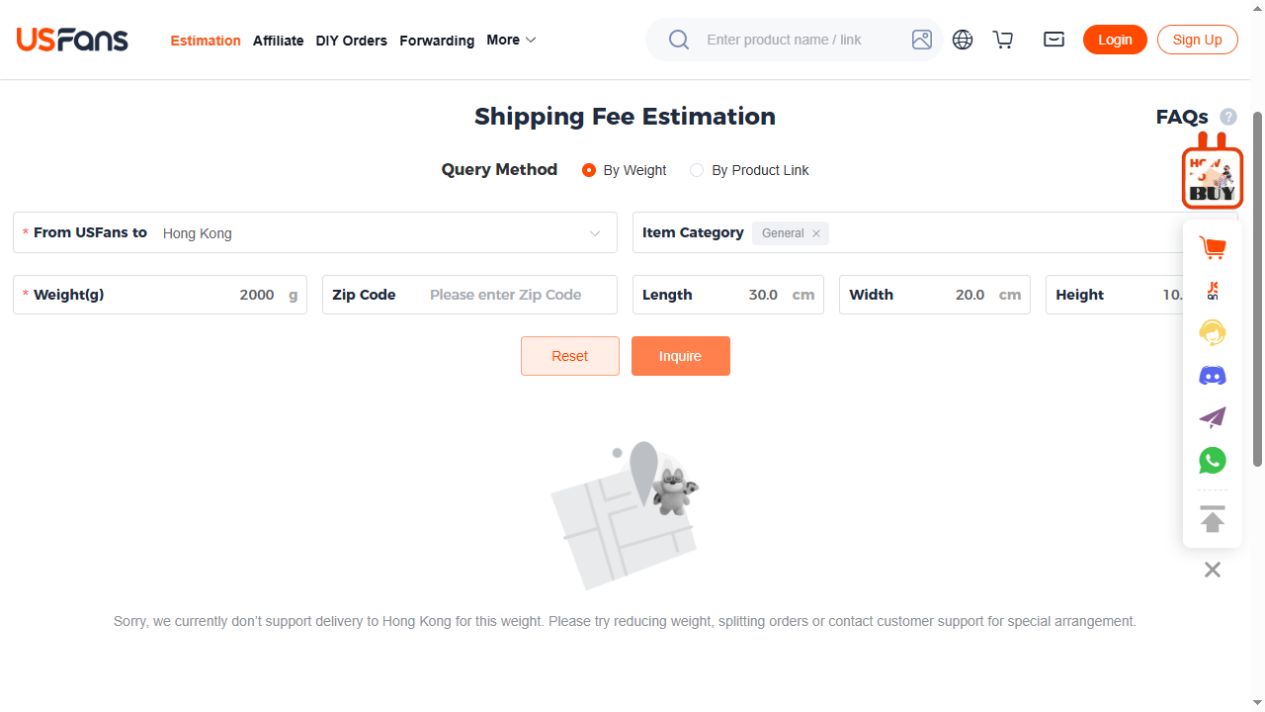
The public estimator returned no service for the following Hong Kong example on 1 October 2026.
| Input | Tested value |
|---|---|
| Contents | General clothing |
| Weight | 2,000 g |
| Size | 30 × 20 × 10 cm |
| Postal code | Not entered |
A shipping quote for shoes cannot be established with a general-clothing example. Check the actual category and dimensions rather than copying a route from a different destination.
For destination-specific examples, see Mexico and Argentina in the Spanish shipping guide.
USFans Shipping: Compare One Parcel with a Split Shipment
Sending everything together is not automatically the cheapest or most useful plan. Splitting a purchase is not automatically better either. The decision depends on which items are ready, what can travel together and the proposals available for the packed parcels.
Use the main USFans shipping guide for the wider process. Here the question is narrower: how should you compare a combined plan with a split plan without leaving part of the cost or waiting time out?
Start with the items that are actually ready
Separate goods ready for dispatch from goods awaiting arrival or an unresolved check. A plan to combine everything may require waiting for the last item. If an important size or condition question is still open, do not approve it merely to make the group complete.
The warehouse guide explains the move from item records to parcel planning. Check any applicable storage conditions before delaying a shipment; do not assume an unlimited waiting period.
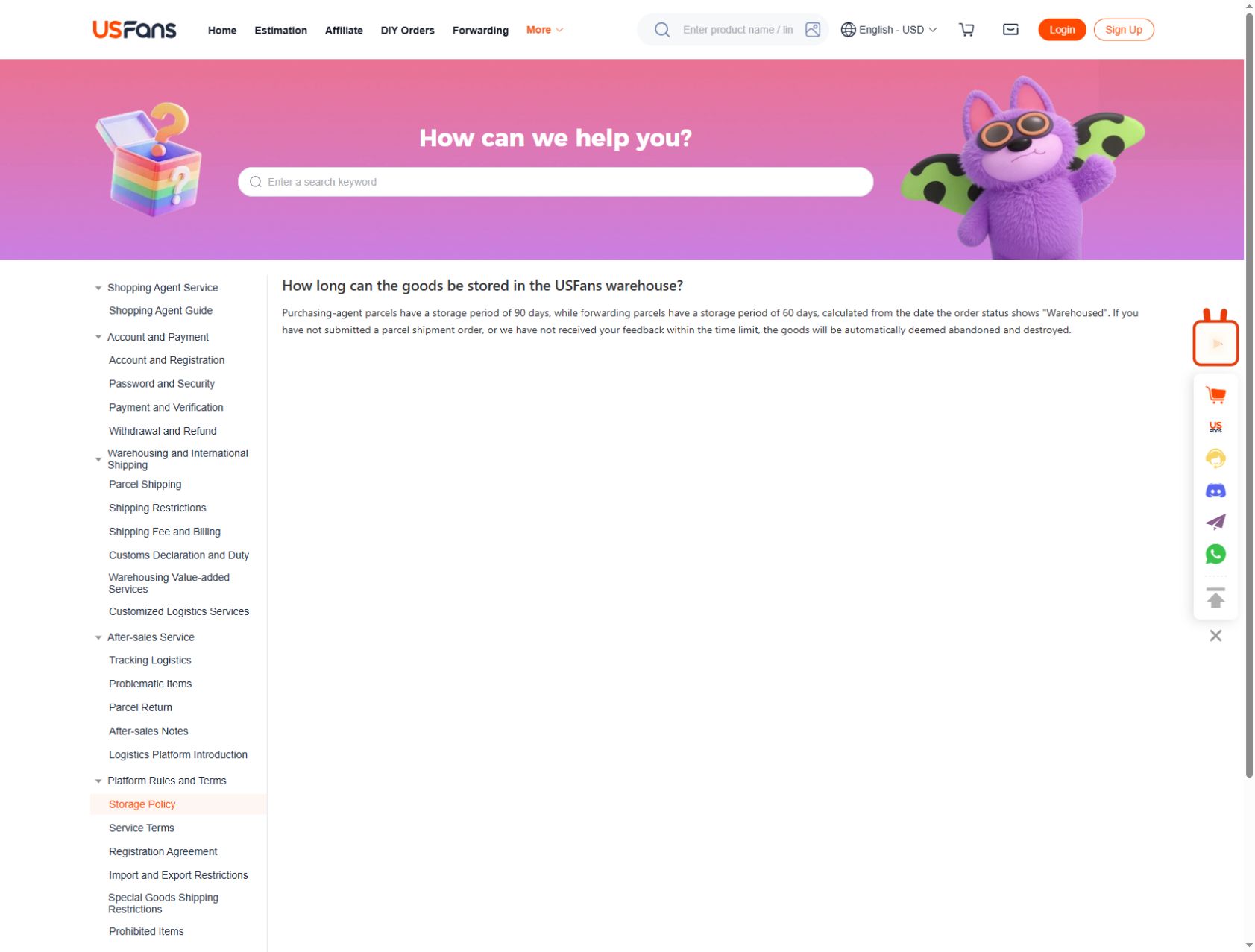
The storage terms checked on 30 September 2026 give purchasing-agent goods 90 days and forwarding goods 60 days from Warehoused, with an abandonment and destruction warning when the stated conditions at expiry are met. Record each item's start date. Waiting to combine a late arrival with older goods must fit those deadlines; a hoped-for shipping saving does not extend them.
Compare complete alternatives
Suppose you have shoes, a sweater and a jacket. You could ask about one combined parcel or a proposal that sends a ready group first and the remaining item later. This is a hypothetical planning example, not confirmation that either arrangement is available for your order.
For the combined option, record the proposed packed weight, dimensions and included work. For the split option, collect those details for every parcel. Comparing one combined quote with only the first of two separate shipments makes the split plan look artificially cheap.
Keep the destination and contents accurate. If a proposal requires a different packing choice, make that difference explicit rather than treating it as the same service at another price.
Work through the trade-offs
Swipe sideways to see all columns
| Question | Combined proposal | Split proposal |
|---|---|---|
| Are all goods ready? | May depend on the last item | May allow a ready group to be considered separately |
| What is the total? | Include all stated services for the parcel | Add every parcel and its stated services |
| Does the packing suit the goods? | Check the combined arrangement | Check protection in each arrangement |
| What remains to be sent? | Identify any excluded item | Keep a separate reference for each remaining group |
These are questions to ask, not promised features or outcomes. The proposals must establish what is possible for the actual goods and destination.
Weight alone cannot settle the choice
Splitting a parcel changes more than the number of shipments. Packaging contributes weight and volume, and the relevant service may use a chargeable-weight calculation. Do not divide a combined amount by two and treat the result as the price of two smaller parcels.
The packing comparison demonstrates how dimensions can change a hypothetical calculation. A real price comparison still requires the offered rules and amounts. A smaller box is not a sufficient reason to remove protection the goods need.
Separate urgency from a delivery promise
If one item is needed earlier, identify the deadline and ask what timing the proposal actually describes. Sending a ready group sooner does not by itself guarantee earlier receipt, especially when the services or destinations differ.
The delivery-time guide distinguishes warehouse and transport stages. Preserve that distinction when comparing a plan that waits with one that starts preparing a shipment now.
Keep product browsing outside the shipment record
You can view a hoodie on OG while considering a future purchase. Its listing does not establish that it is in your warehouse or give the dimensions of a parcel containing it. Only include goods in a shipment plan when the corresponding order and warehouse records support that step.
For each submitted parcel, keep its contents and references together. If there are two shipments, a status for one should not be assigned to both. The tracking guide covers that separation.
Make the final choice from the actual proposals
Choose only after you can account for all goods, all quoted amounts and the packing conditions you need. If an important detail is missing, ask a focused question through the support guide rather than filling the gap with a rule borrowed from another buyer.
Return to the USFans Spreadsheet collection for discovery. A well-organised shopping list can prepare the decision, but it cannot replace the parcel-specific proposal.