
USFans QC Photos: Ask for the View That Can Change Your Decision
Useful QC starts with a question, not a request for more pictures. If you are concerned about a shirt's length, another photograph of its folded front may add little. If the wrong colour appears to have arrived, a measurement alone will not resolve that concern. Match the image you need to the decision you are trying to make.
For USFans QC photos, check that the pictures refer to your selected item before interpreting details. A clear image of a similar product is still evidence about that other product, not the one you are deciding whether to ship.
On this page
What the published inspection scope covers
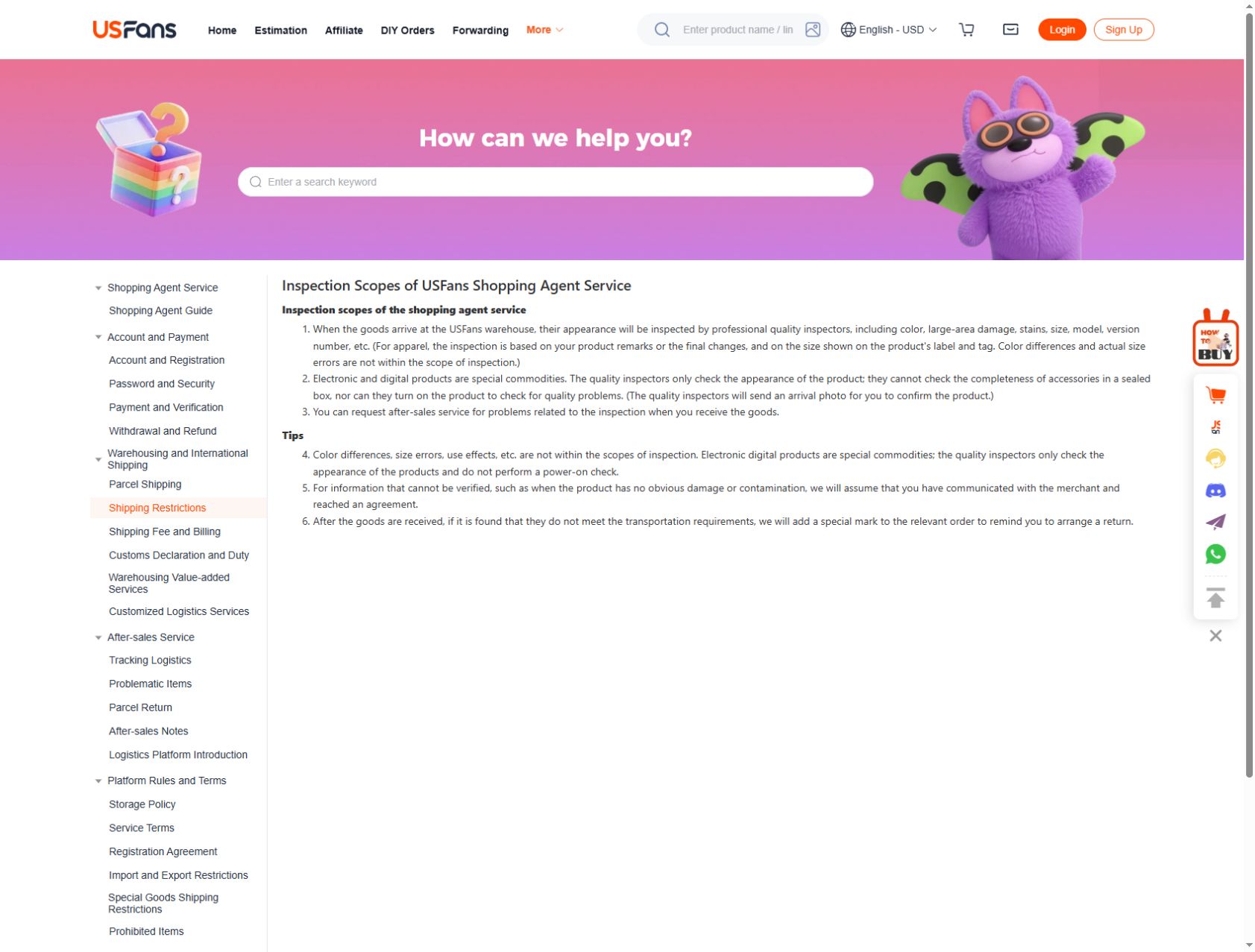
The inspection guidance checked on 30 September 2026 describes checks of visible condition and identifying details: colour, major damage, stains and labelled size or version. The clothing-size check concerns the label, not actual dimensions. Electronics receive an exterior inspection rather than a power-on test, and sealed contents have inspection limits. Match any additional request to the gap that matters for your purchase.
Use that scope to decide which additional question to ask. Do not assume that an arrival picture includes a measurement, a functional test or an authenticity assessment. The existence of a photograph does not tell you that those checks took place.
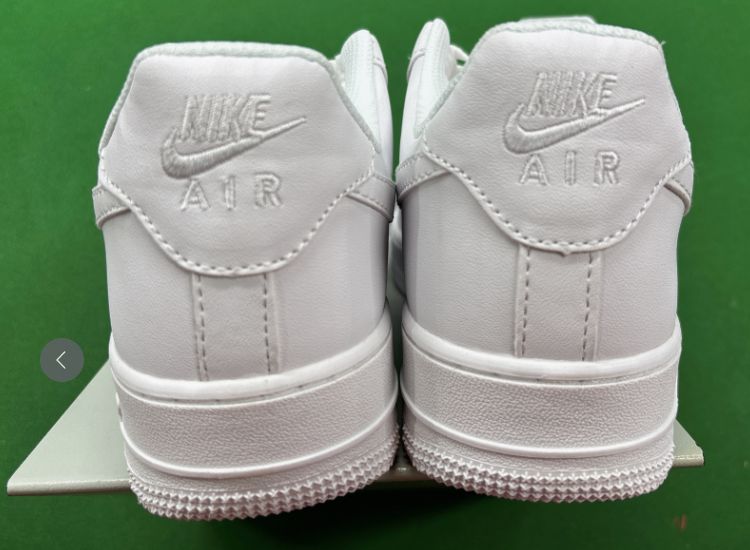
A rear view: what two white shoes actually show
The public USFans Product QC image below, viewed on 30 September 2026, shows the backs of two white shoes. You can examine the embroidered heel lettering, the vertical stitching and the visible back edges of the soles. It does not show the toe boxes, insoles or size labels. This is a reference from the public gallery, not a photograph of our own order or the OG clothing candidates linked in this guide.
The two shoes do not sit at exactly the same apparent height in the frame. That observation alone does not establish a manufacturing mismatch: position and camera angle also affect the comparison. If heel alignment matters to your decision, request a straight rear view with both shoes placed level. For a size question, ask for the relevant label and a clearly defined measurement instead. Neither the listing's selected size nor its estimated weight supplies those missing observations.
Begin with identity, then condition
Compare the pictured item with the saved product and chosen option. Check the details that distinguish it from similar candidates: colour combination, version, quantity and any readable label relevant to the choice. If those do not match, resolve the identity question before spending time on small cosmetic details.
The spreadsheet links guide helps you recover the selected option. Keep that reference available while checking pictures, rather than relying on a memory of the thumbnail.
For a T-shirt, for example, compare the visible design and selected colour with the intended item before considering measurements.
Examine the T-shirt candidate on OG
Compare the candidate's design and option on the listing, then match your warehouse photographs to your own ordered item. Branding alone does not establish composition or authenticity, and a listing photograph cannot establish the condition of the item received.
Turn an uncertain impression into a precise request
“It looks wrong” can describe several different concerns. Identify what you need to see next rather than asking someone to decide the entire purchase for you.
Swipe sideways to see all columns
| Your concern | A more useful request | What it would not settle |
|---|---|---|
| The garment may be too short | A clear measurement between specified points, with units visible | How it will feel on your body |
| A seam appears uneven | A focused view of the affected seam plus enough surrounding area to locate it | Long-term seam strength |
| The option label cannot be read | A readable label image tied to the item | Whether the label's size matches actual dimensions |
| A fastening is obscured | A view that shows the relevant fastening clearly | Durability after repeated use |
These are examples of how to formulate a request, not promises about services or prices currently available. Confirm whether the requested observation can be provided before assuming it will be included.
A measurement needs a method
If you request garment length, specify where the measurement should start and end. Compare it with a garment you own measured in the same way. A numerical difference can be meaningless if one measurement starts at the shoulder and another includes a different part of the garment.
Check that the image shows the relevant endpoints and readable units. A cropped ruler or hidden starting point leaves the result ambiguous. Do not create false precision by reading a blurry image more confidently than it allows.
The size guide develops the comparison. Label size, measured dimensions and preferred fit are separate pieces of information; none should silently replace another.
Inspect the image before diagnosing a defect
A shadow, fold or blurred area can make a detail difficult to interpret. Describe what is visible without immediately declaring a cause. If an area appears marked, a clearer view may help distinguish the observation from an artefact of the photograph.
When requesting another view, keep the same area identifiable. A close-up without surrounding context can be hard to connect to the earlier image. Conversely, a distant view may hide the very detail under discussion. Ask for enough context and clarity to answer the question, not simply the largest number of files.
Do not use lighting differences as an automatic explanation for every mismatch either. If the uncertainty matters to your decision, it remains a question to resolve.
Using a QC finder or community image
A USFans QC finder search can surface images associated with a product or a similar listing. Treat the result as a lead until the item and version are matched. A community member's photo can show what that person received; it does not become your order's inspection record.
When comparing two images, note any difference in the selected option and date. Repeated copies of the same photo are not independent examples. If the source is unclear, do not use the image to make a stronger claim than its context supports.
The image-search guide addresses candidate matching. Compare a finder result with the exact version and visible details before treating it as a useful reference.
Choose between accepting, asking and reconsidering
After reviewing the available information, identify your next action. You may have enough to accept a visible detail, need one further observation or decide the item no longer suits your requirements. Those are different outcomes; a general “looks good” label can hide which one you actually reached.
For a mismatch, ask about the relevant options before arranging shipment. The returns guide helps frame those questions without assuming a universal deadline or outcome. The purchase guide places the check within the wider sequence.
Keep the discussion tied to the item and the issue. If you seek public advice, remove personal account information, labels and identifiers that are not needed to explain the visible concern. Do not repost another person's private order record as your own example.
Common questions
Are more QC photos always better?
Only if they add information relevant to your decision. Several copies of essentially the same view may leave the important question unanswered.
Can a photo establish authenticity?
Do not treat appearance alone as an authenticity determination. Similar visible details do not establish provenance or every hidden characteristic.
Does a readable size label confirm fit?
It confirms what the visible label says. Fit still depends on the relevant dimensions and your preference; consult the size guide for a comparable measurement approach.
Should I ship while waiting for an important answer?
If the answer could change whether you want the item, resolve it before taking the dependent step. Shipping does not make an unresolved product question disappear.