
USFans Size Guide: Compare Measurements Before Choosing a Label
The size you usually buy is a starting clue, not a universal conversion rule. For a product found through a USFans spreadsheet, begin with the exact item and the size information attached to that option. Then compare measurements taken in the same way. A precise number becomes misleading when it describes a different dimension.
This guide does not provide a universal USFans size chart. Clothing, footwear and accessories need different checks, and a letter label cannot replace those details. The practical aim is to make your comparison reproducible before you commit to a choice.
On this page
First decide what the chart measures
A chart may describe the garment itself or the body it is intended to fit. Read its headings and any diagram before using the numbers. A flat garment width is not a body circumference, and a recommended height range is not a measured sleeve length.
If the chart does not identify its method, ask what the relevant figure means. Do not double or halve an ambiguous number merely to make it resemble a familiar measurement. Arithmetic cannot repair an unclear definition.
For example, if a clearly defined flat chest width is 54 cm, doubling it gives 108 cm around that flat section. It does not automatically mean a person with a 108 cm chest will like the fit. This is a hypothetical illustration of the measurement distinction, not a size recommendation for a listed product.
Use a reference garment with the fit you want
Choose something you already wear comfortably for the intended purpose. A fitted shirt is not necessarily a useful reference for an oversized outer layer. Note how you want the new garment to differ before looking at its label.
Lay the reference garment in a consistent position and compare the dimensions that matter. Follow the same starting and ending points shown in the candidate's chart. If its diagram measures sleeve length from a different point, either reproduce that method or obtain clarification; comparing unlike methods creates a false mismatch.
Keep units consistent. If you convert between inches and centimetres, retain enough precision for the comparison, but do not pretend the original measurement is more accurate than it was. A poorly photographed tape does not become exact because a calculator produces decimal places.
Check the dimension most likely to rule the item out
Different garments fail a fit requirement in different ways. Identify the important restriction rather than treating every chart cell as equally useful.
| Product | Useful question to resolve |
|---|---|
| T-shirt | Does the stated length and width match the silhouette you want? |
| Sweater or hoodie | Is there sufficient space for your intended layers without unwanted length? |
| Jacket | Can the measured shape accommodate what you plan to wear beneath it? |
| Pants or shorts | Are waist, rise and leg measurements defined in a comparable way? |
| Matching set | Does each included garment suit you, rather than only the top? |
Use the T-shirt guide, outerwear guide or pants and shorts guide for the product-specific decision. These questions help prioritise information; they do not prescribe a fixed amount of extra room for everyone.
A worked example: comparing a hoodie
Suppose your reference hoodie has the length you want, but you would prefer a little more room across the body. Look for a candidate whose chart defines those two dimensions separately. Increasing the label size might change both, so it is worth checking whether the larger option also becomes longer than you want.
Inspect the hoodie candidate on OG
This is a model to examine, not a garment measured or worn for this guide. Use its actual option information if available; the example does not assign dimensions to it. The visible branding or description does not independently establish authenticity or fabric composition.
If the chart suggests a possible match but omits the decisive dimension, obtain that information before treating the fit question as settled. The QC photos guide explains how to request a measurement with visible endpoints rather than another general photo.
Keep a label check separate from a measurement check
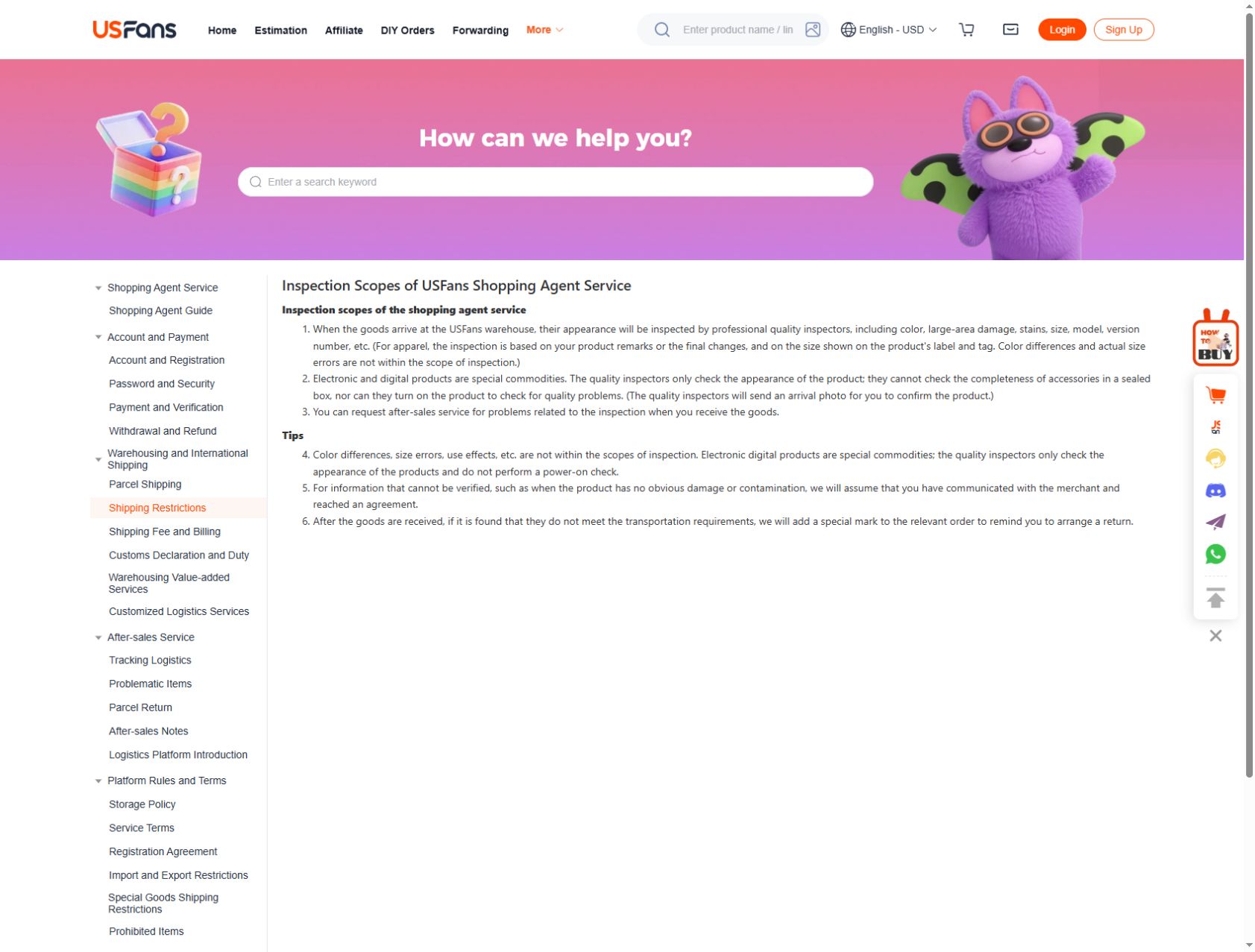
USFans' published inspection scope describes checking apparel labels and distinguishes that from actual size differences. Seeing the label you ordered therefore does not establish that the garment matches every dimension you expected.
When an item reaches the warehouse, first verify that its identity and labelled option match the order. Then address any measurement question that remains important. Ask whether the needed measurement can be provided; do not assume that it was included automatically or invent a current service price.
An answer should relate to the particular item. A chart for a similar listing or a photograph from another order can be informative, but it is not the same observation. Keep those sources separate in your decision.
Footwear needs the relevant system and method
For shoes, identify which sizing system the option uses and what any length figure measures. Foot length, an internal measurement and an outsole measurement describe different things. Do not translate one into another without a relevant explanation.
Use the product's applicable chart rather than assuming that a label worn in another model transfers perfectly. Consider the fit questions you already know matter to you and seek information addressing them. The shoe guide helps narrow the selection without giving a universal conversion for every pair.
A photograph of a shoe label can identify the displayed size. It cannot demonstrate comfort during walking. Treat those as separate stages of assessment.
Accessories and adjustable items still need checking
An adjustable label does not mean an unlimited range. For headwear, belts or other fitted accessories, check which dimension or adjustment range is actually supplied. A photograph showing an adjustment mechanism does not establish that it will reach your preferred fit.
For a bag, dimensions are a different kind of suitability check: they concern what you intend to carry and how the item will be used. Do not treat an external size alone as proof that a particular object will pass through the opening. The accessories guide helps frame those questions.
What to do when the numbers disagree
First check the option, units and measurement method. If those agree and the difference remains relevant, describe it clearly through the appropriate support process. Avoid reducing a specific discrepancy to “wrong size” when you can identify the exact dimension and comparison.
Resolve it before taking a later step that assumes acceptance. The returns guide explains questions to raise about a mismatch; it does not replace the terms for your order. The purchase guide shows where measurement decisions fit into the wider process.
Common questions
Should I always size up?
No universal rule follows from using USFans. Compare the actual item, method and preferred fit. A larger label may change more than the dimension you want to alter.
Is a seller chart enough?
It may answer your question if it clearly describes the relevant option and measurements. If an essential definition or dimension is missing, clarify it rather than assuming the chart covers it.
Can a photo predict how fabric feels or stretches?
Do not infer those properties from appearance alone. Ask for information relevant to the property, and distinguish it from a visible measurement.
What should I save with my chosen size?
Keep the selected option, chart interpretation and the decisive comparison. That lets you revisit the decision if the listing or option changes, without relying only on the letter you remembered.