USFans Football Boots: Start With the Pitch, Then Compare the Pair
Before choosing football boots from a USFans shortlist, identify the surface you will play on and the footwear permitted by the venue. Colour, model name and price come after that. A similar-looking upper can appear on different outsole versions, so save the sole designation with the product option.
On this page
Understand the surface labels
Nike's firm-ground guidance distinguishes FG designs for natural grass from AG designs for artificial grass. Its footwear guide describes TF soles for older artificial surfaces that are shorter and firmer than modern 3G and 4G pitches. Check the particular model against your venue's surface and rules instead of treating all artificial pitches as interchangeable.
| Label you may encounter | What to establish before choosing |
|---|---|
| FG | Whether this firm-ground version is appropriate for your natural-grass pitch |
| AG | Which artificial-grass use the specific model is designed for |
| TF | Whether the turf design matches the venue's surface and rules |
| IC or indoor | Whether the shoe is intended for the court where you will use it |
Ask the venue about an unfamiliar surface instead of identifying it only from a distant photograph. If your weekly sessions use different surfaces, compare the needs separately rather than assuming one listing resolves both.
Keep the outsole in the saved option
When a listing offers several versions, inspect the outsole view and the selected label together. A main image showing one version does not establish that every size or option uses that sole. If the text and images disagree, resolve that mismatch before ordering.
Use the spreadsheet links guide to retain the model, sole designation, colour and size. A shortened note containing only the model family loses the distinction most relevant to the pitch.
Compare sizing without copying your casual-shoe label
Check the model's stated sizing system and chart. Compare measurements using the same units and definitions, and consider the socks you intend to wear when assessing your reference fit. The size guide explains how to avoid mixing a length measurement with a size label from another system.
Do not assume that another buyer's preferred size is suitable for you. Their fit preference and the exact model version matter. A photograph can help identify the selected item, but it cannot tell you how that pair will feel during a session.
Check what the warehouse views actually show
Request views that establish the received option: labels, both shoes and the outsole. If there is a visible discrepancy, identify it precisely rather than asking for a general quality score. The QC guide helps separate an identification check from a performance claim.
A clear outsole photograph is not a test of traction, durability or suitability for every playing condition. Nor does a familiar logo establish authenticity. If a property essential to your use cannot be established for the actual product, do not substitute an attractive photograph for that information.
Resolve the choice before removing packaging
Keep any return question separate from a decision to reduce packing volume. Check the relevant conditions before requesting changes to tags or packaging, as explained in the returns guide. Then compare shipping using the actual proposed parcel rather than a generic cost for “one pair of boots.”
For a full kit, use the jersey guide separately. A coordinated appearance does not resolve the boot's surface or fit requirements.
Inspect an FG-labelled candidate
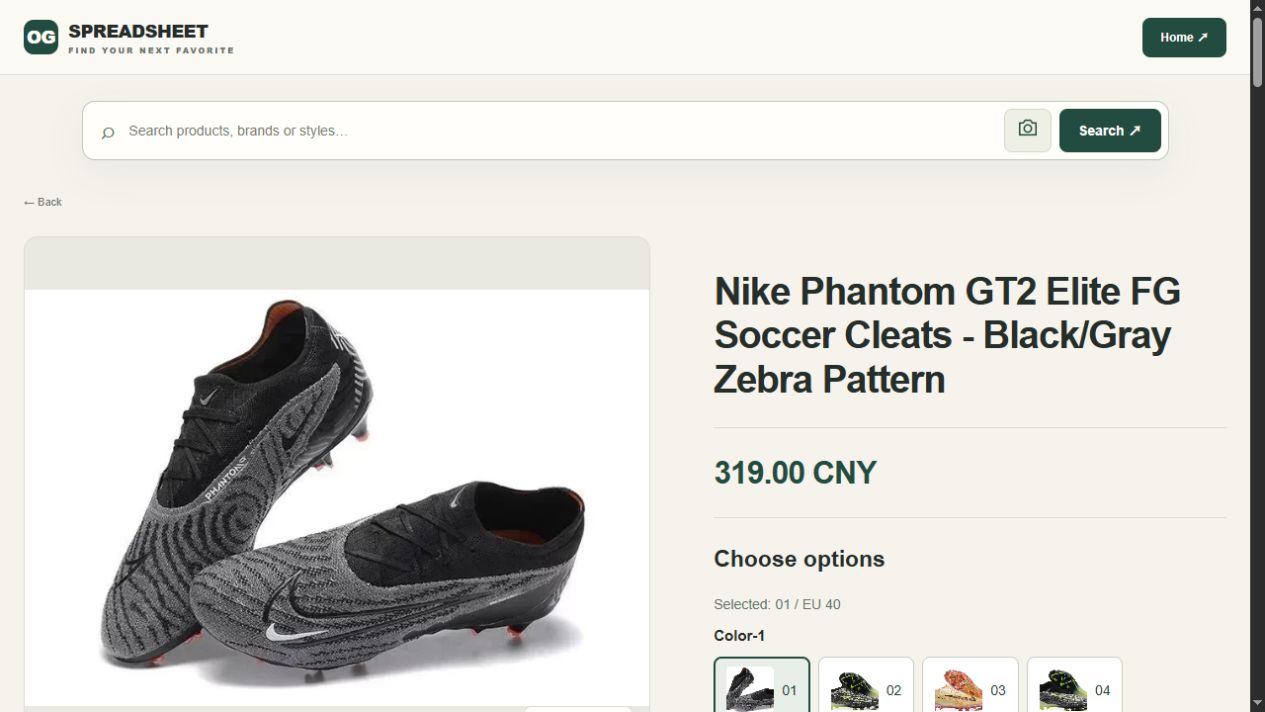
View the black-and-grey Phantom GT2 Elite FG listing on OG. Treat its FG designation as part of the candidate's identity and inspect the current option. This product reference is not a certification of the item or a recommendation for an artificial or indoor surface.
Return to the USFans spreadsheet collection with the pitch requirement and sole version recorded. That allows you to reject an unsuitable option before spending time comparing its colourway.