
USFans Spreadsheet Archive: Recover an Old Find Without Reusing Old Assumptions
An older USFans spreadsheet can help you remember a product, recover a description or understand why you saved a particular option. It is less useful as a statement of what you can buy today. Keep those purposes separate: recovering the idea is not the same as confirming the current offer.
This guide explains how to use an older sheet or saved entry you already have. It is not a claim that a downloadable archive of every historical USFans collection is available here. For new discovery, start with the USFans spreadsheet; for a broken destination, use the links guide.
On this page
Find out what the date actually describes
A year in a document title may describe the collection's theme or edition, not when each row was last checked. A file saved recently may contain much older entries. Conversely, an old collection can include a row that was updated later.
Look for the date attached to the information you need. Was it the date of a price observation, a photograph, a comment or simply the document's creation? Do not convert one type into another to make the entry appear more current.
If the row is undated, retain that uncertainty. You can still use its description to search for a candidate, but should not present its price or availability as a current fact.
Preserve the original before replacing anything
Keep the old address and option description while investigating the destination. If you immediately overwrite them with a similar product, you lose the ability to explain what changed.
For a private shortlist, use separate old-reference and current-candidate notes. The first preserves the earlier item; the second records the result of your new check. You do not need to keep personal account information with either note.
An unresolved link is also a useful observation. Record what now opens rather than concluding that the product was permanently removed after a single failed attempt. The spreadsheet links guide covers the distinction between a destination failure and an option mismatch.
Decide which facts can travel forward
Some old information helps identify a product; other information depends on a particular moment or transaction. Treat them differently when rebuilding your selection.
| Information in the old entry | How to use it now |
|---|---|
| Distinctive design description | Use it to identify a candidate, then compare the actual version. |
| Saved colour or size | Preserve it as the intended choice; check whether the current page offers it. |
| Historical price | Keep its date and currency; do not use it as a current payable amount. |
| QC photograph | Keep it attached to the item and experience it originally depicted. |
| Shipping anecdote | Retain its route, destination and period where known; do not promise the same result. |
None of these steps requires pretending the archive is useless. They preserve the value of the old record without making it say more than it can.
A replacement may be a new decision
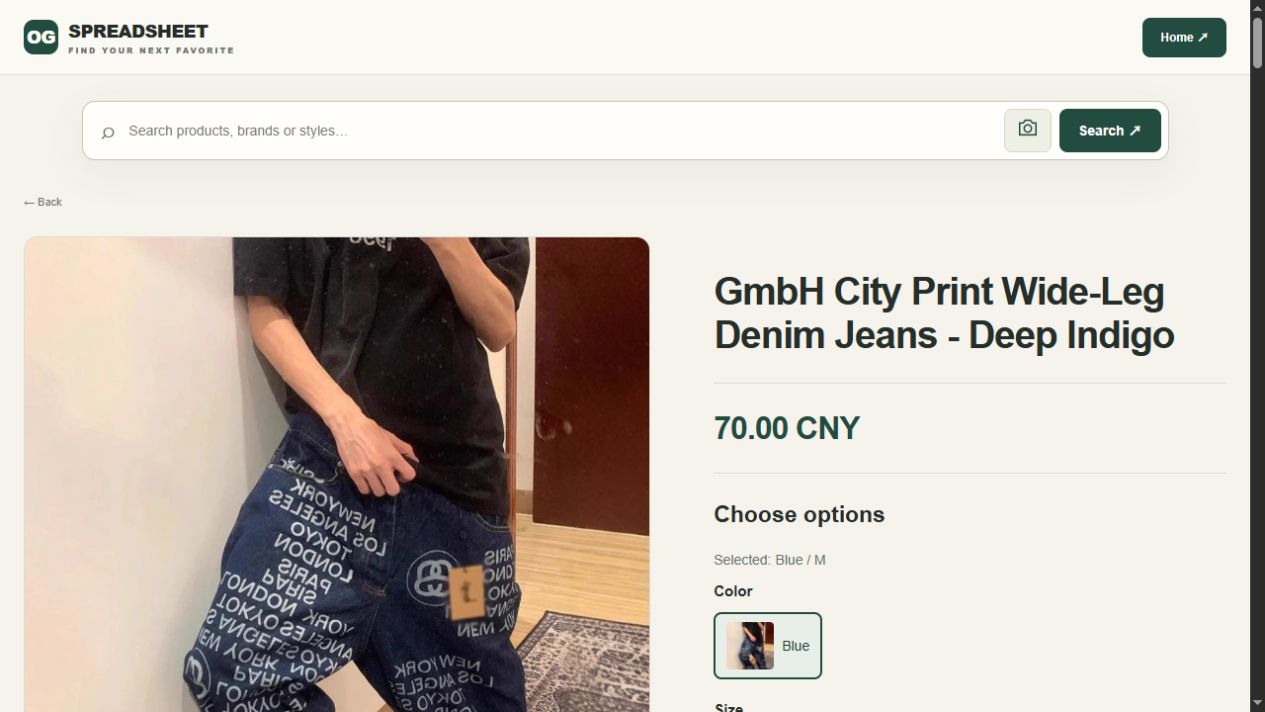
Suppose an older entry described wide-leg dark jeans. You find a current-looking page with a similar silhouette, but cannot establish whether it is the same version. The old entry has helped you recover the style you wanted. It has not yet supplied measurements or a quality observation for the new candidate.
Examine the wide-leg denim candidate on OG
Retain a new size label without inventing old measurements
The title saved on 30 September 2026 identified the jeans destination. A 1 October selected view added Blue / M and 70.00 CNY, with a catalogue image of the jeans being worn. Neither record supplies a measured inseam. If an older row recorded a trouser length, retain its original source instead of attaching it to this newer size label.
This is a product to inspect, not a verified replacement for a particular archived row. It was not purchased or measured for this guide. Compare its actual option and available details; branding alone does not establish authenticity or composition.
Use the pants and shorts guide to decide which dimensions matter. If the candidate differs from the original, save it as a new choice rather than carrying an old verdict across unchanged.
Keep old photographs attached to their source
A photograph can remain informative after a link changes, but its subject does not change with the URL. If you place that photograph beside a new listing, a reader may assume it shows the new product. Avoid that implication unless the match has been established.
The QC guide explains what images can support. Repeated copies of an older image do not become several independent examples, and a newly uploaded copy is not a new inspection date.
If you share someone else's image, resolve permission and remove unnecessary personal information. Cropping a name does not by itself establish permission to reuse the picture. Keep the description of what it shows accurate after any privacy editing.
Recover a budget without freezing an old price
An old price can explain why you originally shortlisted an item. For a new purchase, compare the actual selected option and currency again. A difference may reflect a changed option as well as a changed amount; establish the comparison before calling it a price increase.
Keep shipping separate. A previous parcel's total is not a quote for the new combination of goods. The shipping calculator guide helps you rebuild the relevant inputs rather than inheriting someone else's parcel assumptions.
Do not transfer an expired promotion or an unclear coupon annotation into a current saving. If an offer matters to the decision, check its actual conditions before counting it.
When several archived rows point to one item
Compare whether the rows differ meaningfully or merely repeat a destination. One may preserve a particular option or a dated observation worth retaining. Another may add no new information.
Combine duplicates in your private working list only after identifying those differences. Keep useful dates and context rather than selecting whichever row sounds most confident. The best spreadsheet guide explains why variety and duplication are not determined by row count alone.
Finish with a current next step
After reviewing the archive, give each retained candidate a specific action: reopen the destination, clarify the option, obtain a measurement or compare the parcel implications. Do not leave it marked “ready” merely because the original row was detailed.
If you now have enough information to continue, use the purchase guide. If you are still judging what the collection itself provides, the spreadsheet review separates discovery value from transaction evidence.
Common questions
Does changing the year in a title refresh the entries?
No. The relevant row and destination need checking. A new label does not establish a new price observation, photograph or option.
Can an archived QC photo help with a new order?
It may suggest what to examine, but remains a record of the pictured item. It is not the new order's inspection result.
Should I delete every broken row?
You may want to preserve enough information to recover the original choice. Keep unusable references separate from candidates you have actually rechecked, so the old row is not mistaken for a working offer.
Is an old spreadsheet safer because people have used it for years?
Age alone does not verify its current destinations or every transaction. Use the safety guide when checking the action you intend to take now.
USFans Spreadsheet 2025: Revisiting an Older Product List
A saved USFans spreadsheet from 2025 can help you remember a model or reconstruct a shortlist. It cannot, by its date alone, tell you what is available to buy now. Treat the older entry as the beginning of a comparison: preserve what it said, then check the offer you can actually open today.
This guide is for revisiting a list you already have. It is not a downloadable copy of a particular 2025 spreadsheet or a claim that the products below appeared in one.
Keep the original entry before changing it
If you replace a broken destination immediately, you lose the distinction between the old item and the alternative you found. Keep the original product name, destination and option description together. Put the new candidate beside them rather than overwriting the old choice.
That distinction matters when the old list included a colour, size or version that is no longer shown. A similar photograph may help identify the style, but it does not prove that the new offer supplies the same item.
The archive guide covers keeping older references organised. The product-page guide helps when all you have left is a screenshot or incomplete bookmark.
Separate four different dates
The year in a collection title may refer to its first publication, while individual entries were added or edited later. A date on a review is a further event, and your own latest link check is another. Do not collapse all four into “updated in 2025”.
For a personal comparison, record whichever dates are actually available. Leave an unknown date unspecified rather than inferring it from the filename. If a product has been checked today, that dates your observation of the page; it does not prove when the seller first listed it.
Decide what survived the link check
Swipe sideways to see all columns
| What happens when you open the old destination | What you can retain | What needs a new decision |
|---|---|---|
| The item appears with matching details | Its identity as a candidate | Current option, price and conditions |
| The page opens but the variant differs | The reference for comparison | Whether the available variant meets your needs |
| A different item appears | The old record only | Whether the replacement is worth considering separately |
| No usable product appears | The saved name and image | A fresh search, without claiming an exact recovery |
The purpose is not to keep every row alive. It is to avoid treating an unverified substitute as the original recommendation. The spreadsheet links guide explains how to compare the entry with the destination.
An old price needs its original context
A price copied into a list may have referred to a particular option, quantity or promotion. Before comparing it with today's figure, check whether you are looking at the same unit and variant. If the old record lacks that information, do not calculate a precise increase as if the comparison were complete.
Also keep the item price separate from the cost of receiving it. A historical product amount does not preserve a current shipping quote, packing choice or delivery arrangement. Use the shipping guide for the parcel question rather than extending an old row into a present-day total.
Build a current shortlist without rewriting history
Suppose an old row reminded you that you wanted an everyday layer. You can inspect the garment options on OG as a new candidate. That link is not evidence that this item belonged to your 2025 list, nor that it is an identical replacement.
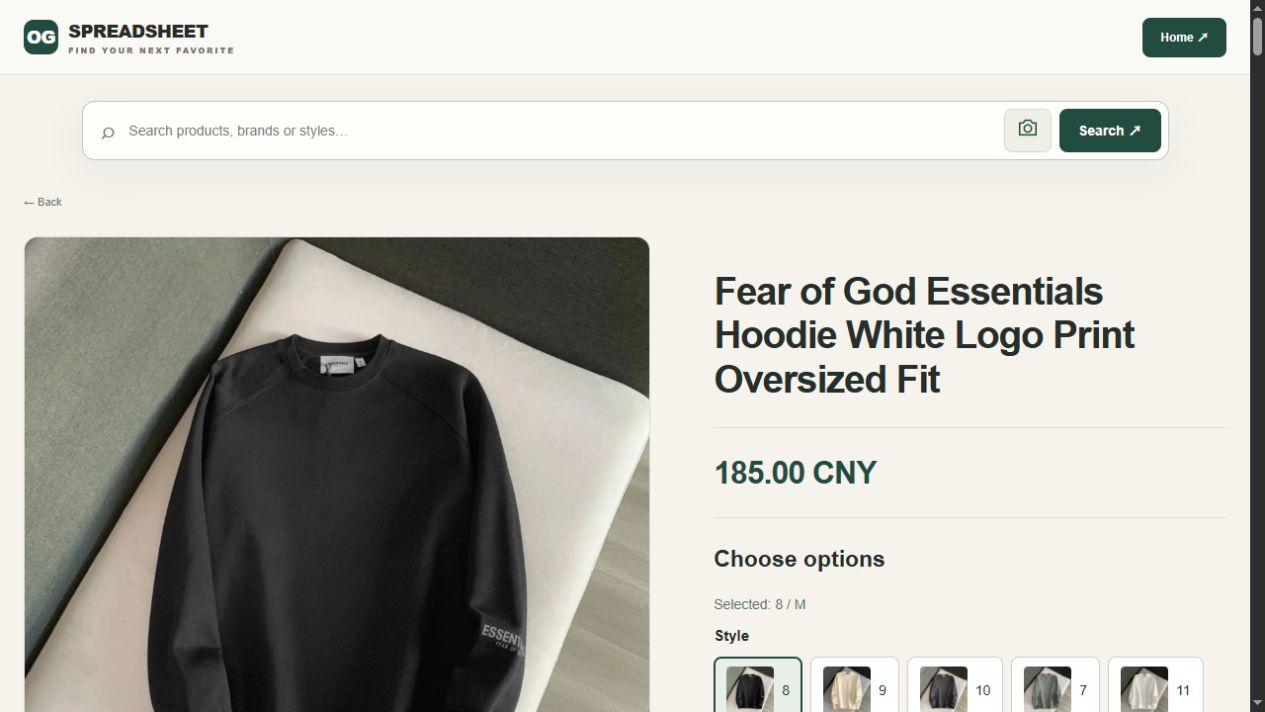
Do not give a current option an invented past
The current comparison image was captured on 1 October 2026 with Style 8 / M selected: a black crewneck at 185.00 CNY. The title-only observation from 30 September used the hoodie heading but did not establish that selected design. These records explain why an unchanged address is insufficient to reconstruct an option from a 2025 shortlist.
Compare the intended shape, selected size and details needed for your wardrobe. If the original choice had no hood, decide whether a hooded alternative still meets your need rather than treating the designs as interchangeable. Keep useful inspiration from the old entry, but make the purchase decision from the offer and information you can now verify. If the older version is essential, a merely similar item should not be presented as the same find.
Questions worth resolving before you buy
Does an older spreadsheet become useless?
No. It can retain names, visual references and your previous preferences. Its usefulness for discovery is separate from the current usability of each destination.
Should I rename the file to the current year?
Changing the filename does not refresh its contents. If you make a revised copy, preserve the older version and clearly distinguish new checks from unchanged entries.
Where should I continue browsing?
Start with the USFans Spreadsheet collection, compare how lists organise choices in the best-spreadsheet guide, and use the buying guide once you have a candidate. A year label should help you understand context, not replace the checks behind a purchase.